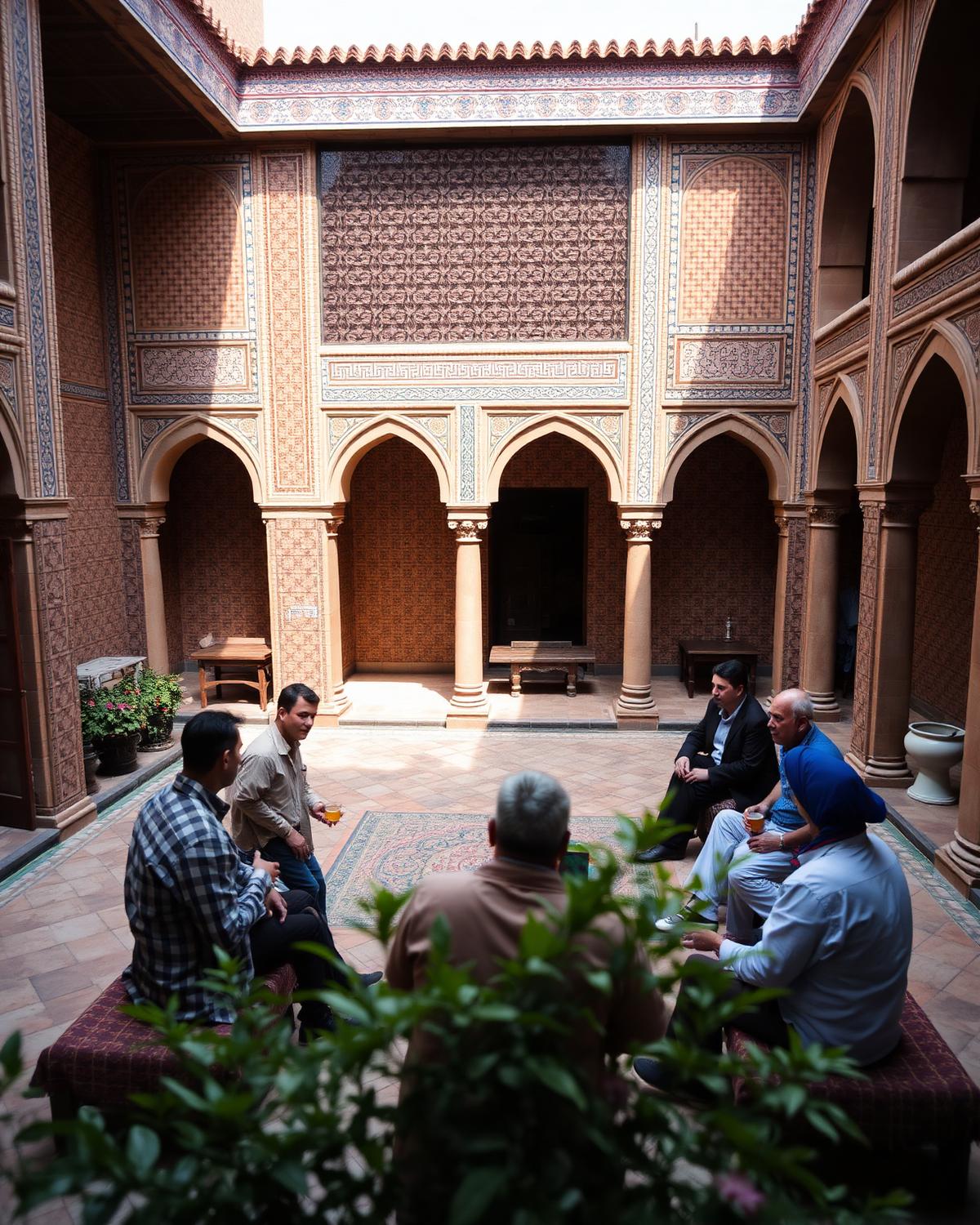
Iran is a young country: more than half the population is under 35, and most of them have moved at least once for university, military service or work. Every one of those moves resets a social circle to zero, which is why so many Iranians in their twenties and thirties describe the same quiet problem — a huge extended family, a phone full of contacts, and very few people they can call on a Tuesday evening.
The good news is that Iranian social life is built for exactly this. Hospitality here is not a cliche; it is a working system. An invitation is rarely a one-off, tea is rarely just tea, and being brought along by a friend of a friend is the normal route into any group. The catch is that almost nothing happens in public-facing venues you can simply walk into. Circles form around private homes, family networks, university departments, workplaces, mountain trails and cafes where the same people show up every week.
Where friendships actually start in Iran
Four settings do most of the work. First, the mountains: hiking is a genuine national pastime, and Friday morning trails from Tehran to Shiraz are full of groups who welcome one more walker. Second, cafe culture: Iran has one of the most developed independent cafe scenes in the region, and a regular table is the closest thing to a neighbourhood club. Third, classes and workshops — language, music, calligraphy, pottery, photography, climbing — where showing up weekly does the introducing for you. Fourth, sport: futsal, volleyball, climbing gyms and women-only fitness clubs all run on fixed teams that need players.
Cities to start with
Tehran is the country's social engine — 9 million people in the city, closer to 15 million in the metro area, with the Alborz mountains rising straight out of the northern suburbs. Mashhad, Isfahan, Shiraz and Tabriz each have large student populations and their own strong cafe and bazaar cultures. Wherever you are, the same rule applies: pick one recurring thing and go back to it four times.
For newcomers and returning diaspora
If you are arriving from abroad — for work, study, family or a return after years away — language exchange groups, coworking spaces and hiking groups are the fastest way in, because all three are used to newcomers. Expect to be invited to a family gathering long before you are invited to anything resembling a party, and expect that invitation to matter more.