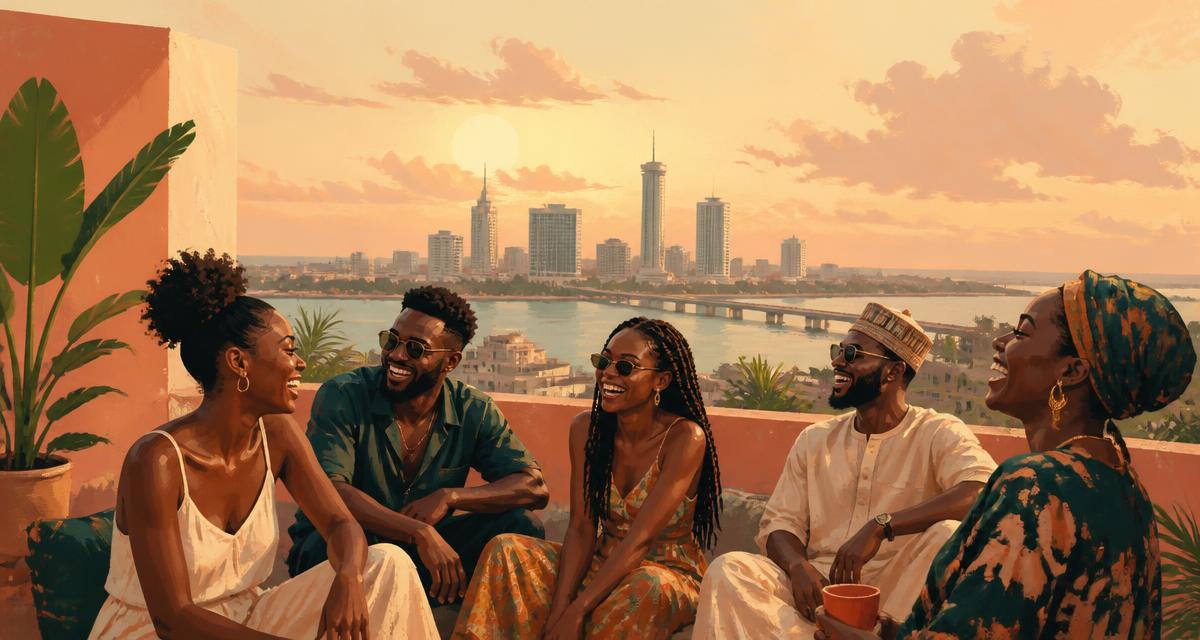
Lagos is a city of roughly 17 million people growing by nearly 4% a year, which means an enormous share of the people around you also arrived recently and are also quietly wondering how to build a circle. That is the strange loneliness of Lagos: you are never physically alone, and it is still entirely possible to go months without making a real friend.
The first thing to understand is the Island and Mainland divide, because it shapes almost every social decision here. The Island — Victoria Island, Ikoyi, Lekki — carries the nightlife, the brunch culture, the corporate crowd and the higher prices. The Mainland — Yaba, Surulere, Ikeja — carries the students, the tech ecosystem, the older neighbourhoods and the deeper sense of community. Neither is the real Lagos. But traffic makes crossing between them a genuine commitment: the Third Mainland Bridge starts backing up before 5am, and Lagosians spend close to a third of their lives commuting. Choose the side of the water your social life will actually live on, then build there.
The good news is that Lagos has real, findable places where people gather on a schedule. Terra Kulture on Victoria Island runs theatre, gallery shows and live performance nights. Freedom Park on Lagos Island, built on the site of a colonial-era prison, hosts concerts and the Lagos International Jazz Festival. Alliance Francaise at the Mike Adenuga Centre in Ikoyi programmes free screenings, exhibitions and concerts year round. Nike Art Gallery in Lekki is one of the largest galleries in West Africa. Art X Lagos, the continent-leading art fair, marked its tenth edition in 2025. The Lekki Conservation Centre reopened its canopy walkway in 2024.
If you want recurring people rather than one-off events, the running scene is the easiest door in Lagos — Lekki-Ajah Runners Club and Eko Runners Club both build genuine friendships around a free weekly habit, and Train To Run Lagos guides people through a twelve-week block toward the Lagos City Marathon. Lagos Games Meetup runs monthly board game nights. The Lagos chapter of the Noname Book Club meets monthly. In Yaba, CcHub hosts open tech and developer meetups that function as the mainland networking scene.
One cultural note worth taking seriously: Lagos friendships tend to travel through introductions rather than cold approaches. Being brought into a group by someone already inside it carries far more weight than showing up alone and hoping. Food and hosting do a lot of the work — an invitation to eat is usually an invitation to belong. And owambe culture means a Lagos party is rarely a closed guest list; being brought along by a friend is completely normal, not an imposition.
Whether you are an IJGB finding your footing after years abroad, someone who moved from another state for work, or a Lagosian whose circle quietly dissolved into work and traffic, the city rewards showing up in the same room repeatedly. That is the whole trick. Pick a neighbourhood, pick a recurring thing, and go back.