Creatives
Affinity

Meet new friends through Creatives.

Artists, writers and makers

Creatives
A guide to creatives friendships

Meet fellow artists, writers, musicians and designers who want to make things together, not just talk about it.

01Creative work is lonely. It does not have to be.

Creative work is lonely. It does not have to be.

Most creative practice happens alone in a room. The people who keep going usually have a small circle who see the unfinished work — a critique group, a co-working table, a studio share.

02Ways to find your people

Ways to find your people

  • Life drawing, ceramics and print workshops: side-by-side, no small talk required.
  • Critique groups and writing circles that meet monthly with actual work in hand.
  • Open studios, zine fairs and gallery openings in your own neighbourhood.
  • Shared studio space, even one desk. Proximity beats intention.
How creatives friendships form

How people actually meet through Creatives.

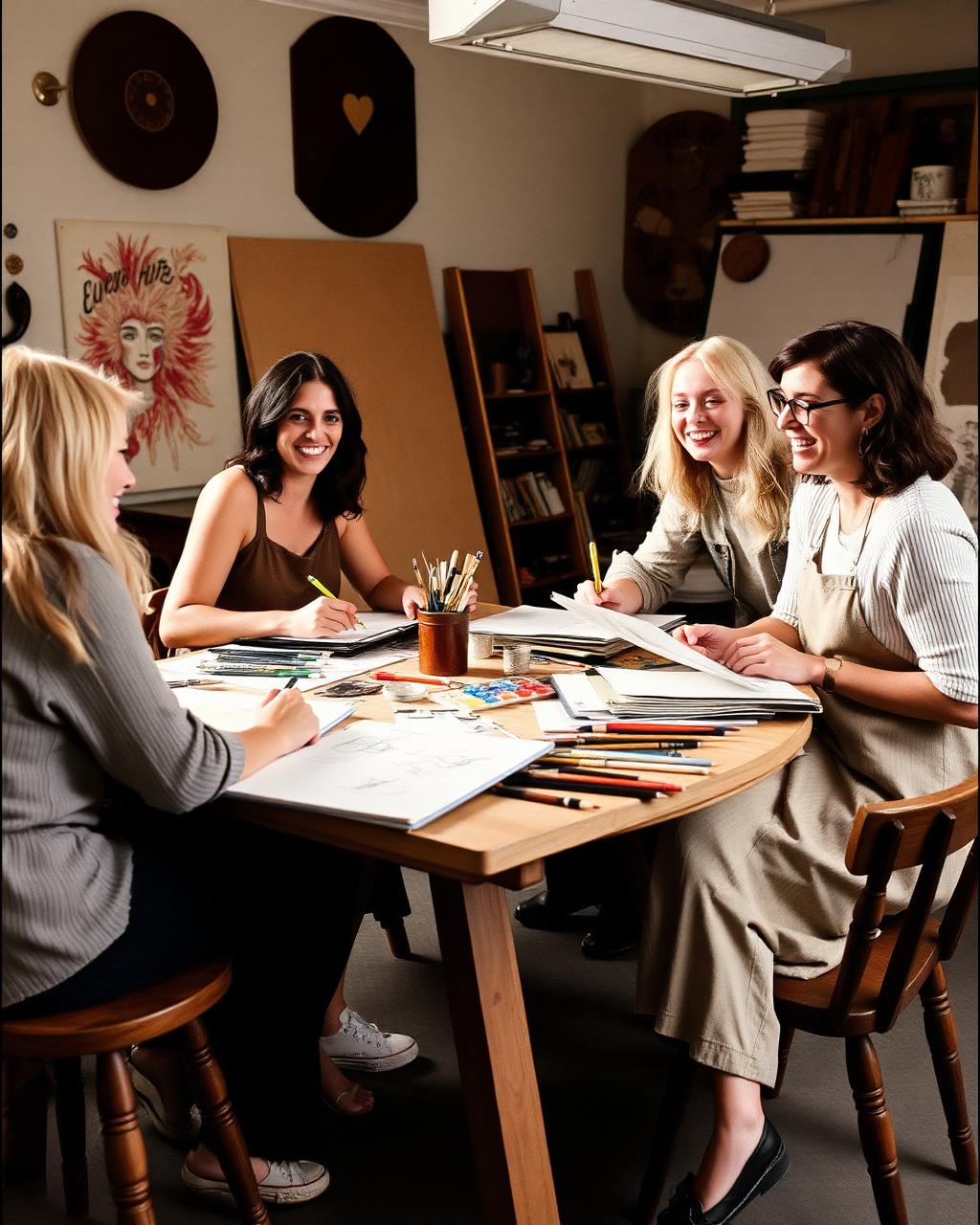
Creatives bond over making things in the same room. Gallery openings give you contacts; an eight-week pottery, print or photography class gives you friends. Shared materials, shared mess and shared critique remove the need for networking small talk.

Open studios, figure-drawing nights and zine fairs all work when they repeat. One-off exhibitions are useful for inspiration; recurring workshops are useful for belonging.

The move is simple: pick one medium you already care about, join a beginner-friendly class, and stay for the after-session coffee.

Typical hangouts

  • Weekly workshop / class

    Fixed slot, same faces. Highest friendship yield of any creative format.

  • Open studio night

    Bring your own project. Low structure, high ambient company.

  • Critique / portfolio share

    Structured feedback circles. Intense but fast for trust.

  • Gallery crawl / opening night

    Good for sampling scenes; weak for friendship unless you return with the same people.

Your first month

  • Week 1 — Join one class

    Choose something with at least six sessions. One night is tourism; a course is community.

  • Week 2 — Ask one process question

    Compliment specific work. Specificity is how creatives recognise seriousness.

  • Week 3 — Share something unfinished

    Show a draft or sketch. Vulnerability at the table accelerates trust.

  • Week 4 — Propose a side hang

    Museum afternoon, supply-store run, or collaborative mini-project.

About Creatives

Meeting new friends through creatives — questions, answered.

How do creatives make friends as adults?
Through repeated making, not networking mixers. A class or open studio that meets weekly beats a dozen openings.
Where can I find the creatives community?
We're actively mapping creatives circles in cities worldwide. Bookmark this page or check back soon — the directory grows every week.
I’m not a ‘real’ artist — can I still join?
Beginner and mixed-level workshops exist for exactly that reason. Curiosity and consistency matter more than a CV.
Online creative communities or IRL?
Online is great for feedback and discovery. Friendship sticks when you share a physical table or studio hour.
What if my city has an exclusive art scene?
Skip the gatekept openings. Look for community centres, libraries and paid classes — they optimise for learners, not status.
Are creative meetups expensive?
Classes cost money; many open studios and drawing nights are cheap or free. Start with the lowest-friction paid course you can finish.
Can introverted creatives find friends this way?
Yes. Making is the conversation. You can be quiet and still belong after a few weeks of shared work.
Writers count as creatives here?
Yes — writing groups, reading nights and critique circles sit in the same pattern as visual workshops.
How do I avoid the dating-app vibe?
Choose skill-based rooms (class, studio, critique) over nightlife openings marketed as ‘creative mixers’.